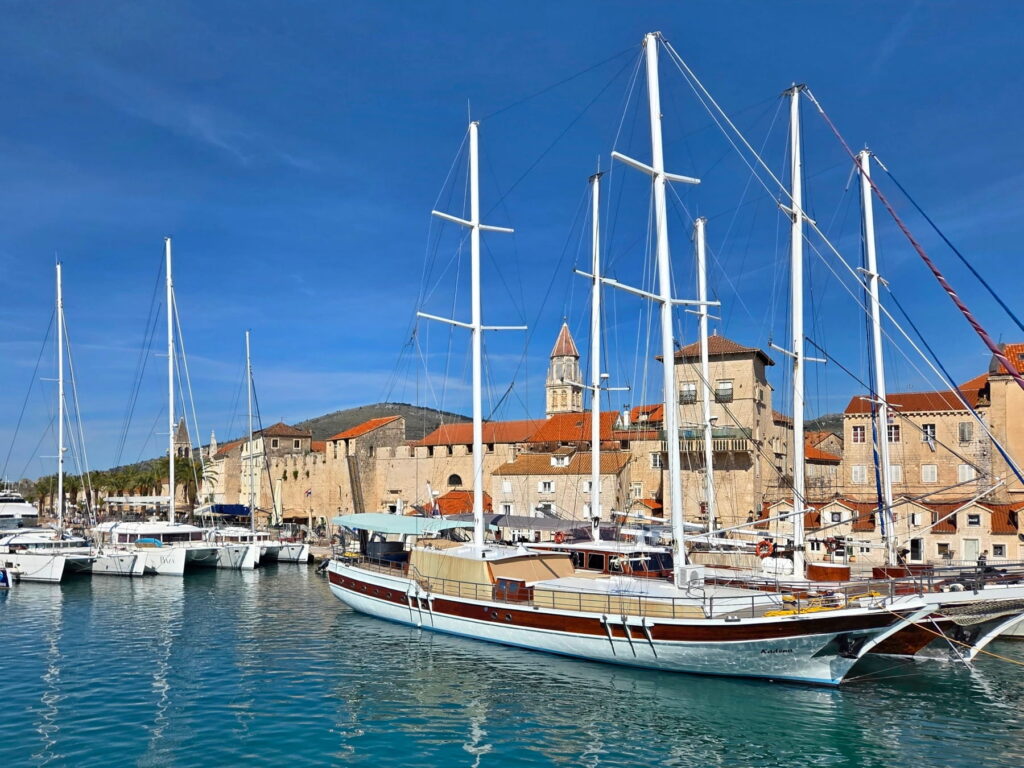
Trogir is one of the most atmospheric small towns on the Croatian coast, with its old stone streets packed onto a tiny island between the mainland and Čiovo. The historic center is compact, walkable, and full of details: carved portals, quiet courtyards, laundry above narrow lanes, and polished stone underfoot.
The best things to do in Trogir are not spread far apart, which makes the town easy to enjoy in a few hours or over a relaxed weekend. Travelers come for the UNESCO-listed old town, the cathedral, Kamerlengo Fortress, seafood restaurants, and that classic Adriatic evening mood along the waterfront.
Compared with Split or Zadar, Trogir feels smaller and more intimate, but in summer it can be just as busy in the central streets. Visit outside peak season and the town becomes much calmer, with a more local rhythm and softer light on the old stone.
Top Things to Do in Trogir
- Explore the UNESCO-listed Old Town
- Visit the Cathedral of St. Lawrence
- Climb Kamerlengo Fortress
- Walk along the waterfront promenade
- Get lost in the narrow medieval streets
- Cross to Čiovo for sea views
- Enjoy grilled fish and Dalmatian food
- Use Trogir as a base for Split, Šibenik, and Krka National Park
Explore Trogir Old Town
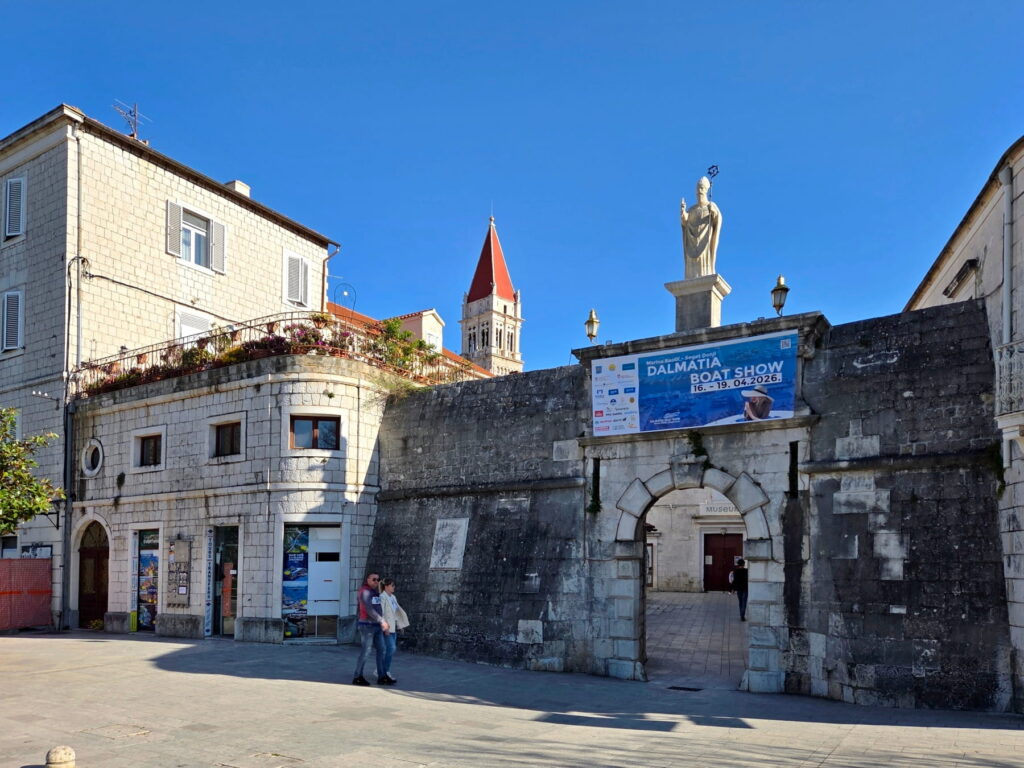
Trogir’s old town sits on a small island, only about 500 meters long and 250 meters wide, so everything feels close. You can cross a bridge, step through the old gates, and within minutes be surrounded by stone houses, tiny squares, churches, and restaurant terraces.
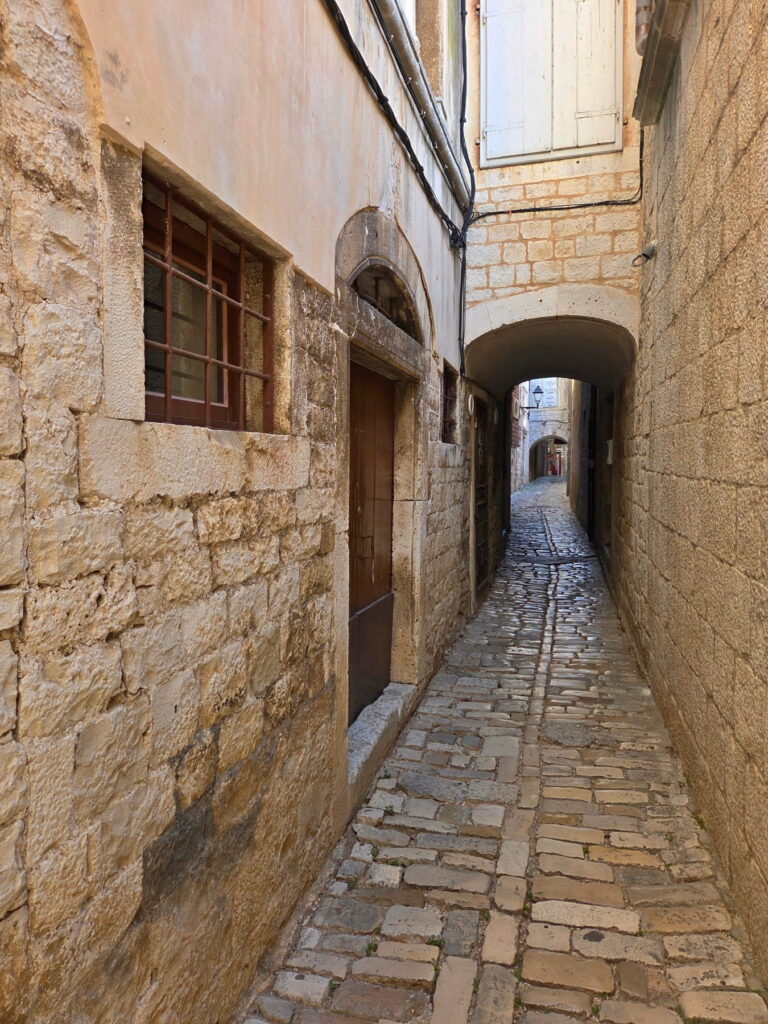
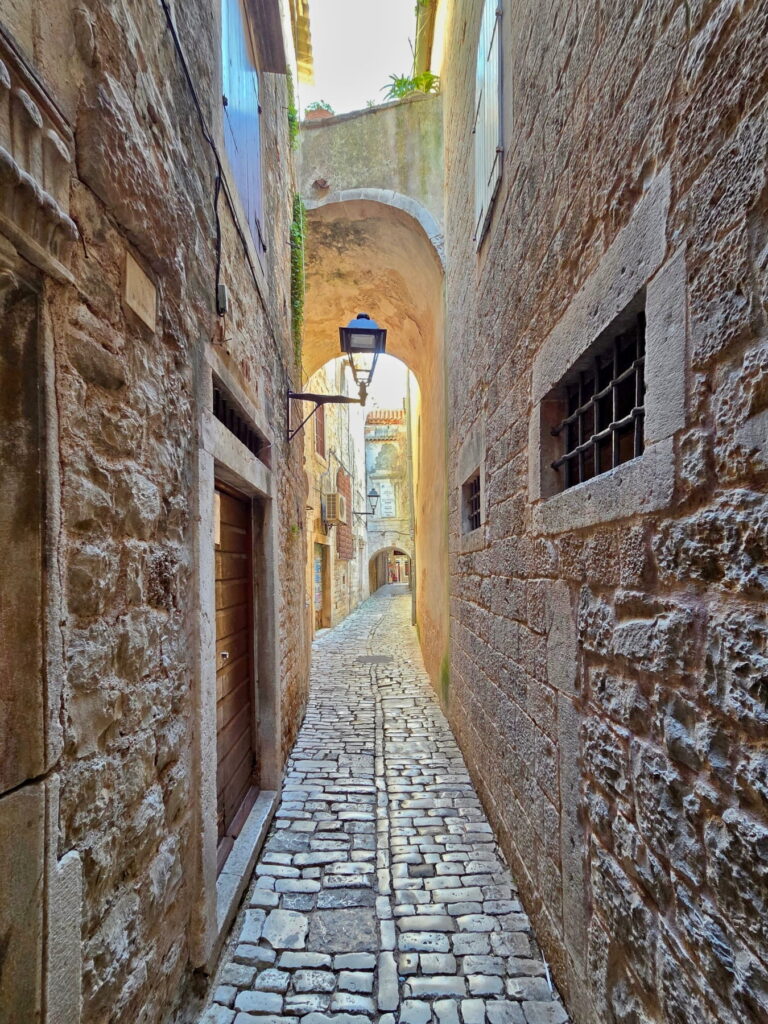
The best way to experience it is without a strict route. Some lanes are barely wide enough for two people to pass, and the town has that bright limestone glow you notice in many Dalmatian towns, but here it feels especially concentrated.
Tip: Come early in the morning or outside summer if you want space to look around properly. In July and August, the main streets can feel crowded very quickly.
Visit the Cathedral of St. Lawrence
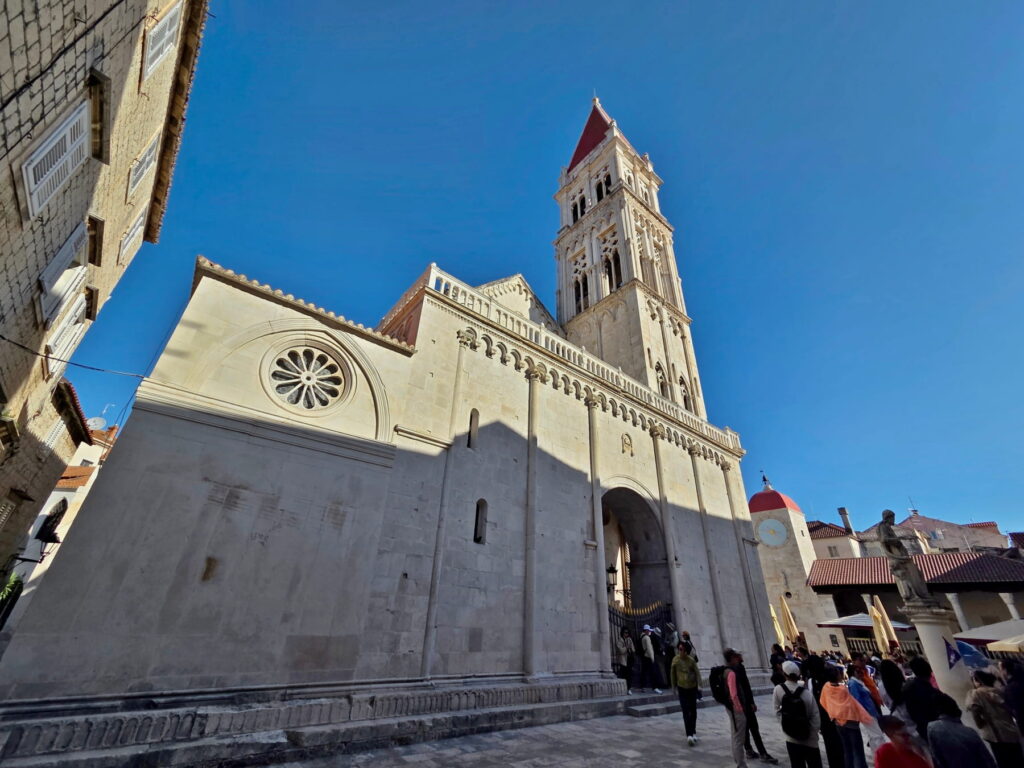
The Cathedral of St. Lawrence is the main landmark in Trogir and one of the finest historic buildings on the Croatian coast. Its carved portal, bell tower, and central position make it impossible to miss when walking through the old town.
Inside, the atmosphere is cooler and quieter than the streets outside. The details are worth slowing down for, especially if you enjoy architecture and old stonework rather than just ticking off sights.
Tip: If the bell tower is open during your visit, climb it for one of the best views over the rooftops, harbor, Čiovo, and the narrow Trogir Channel.
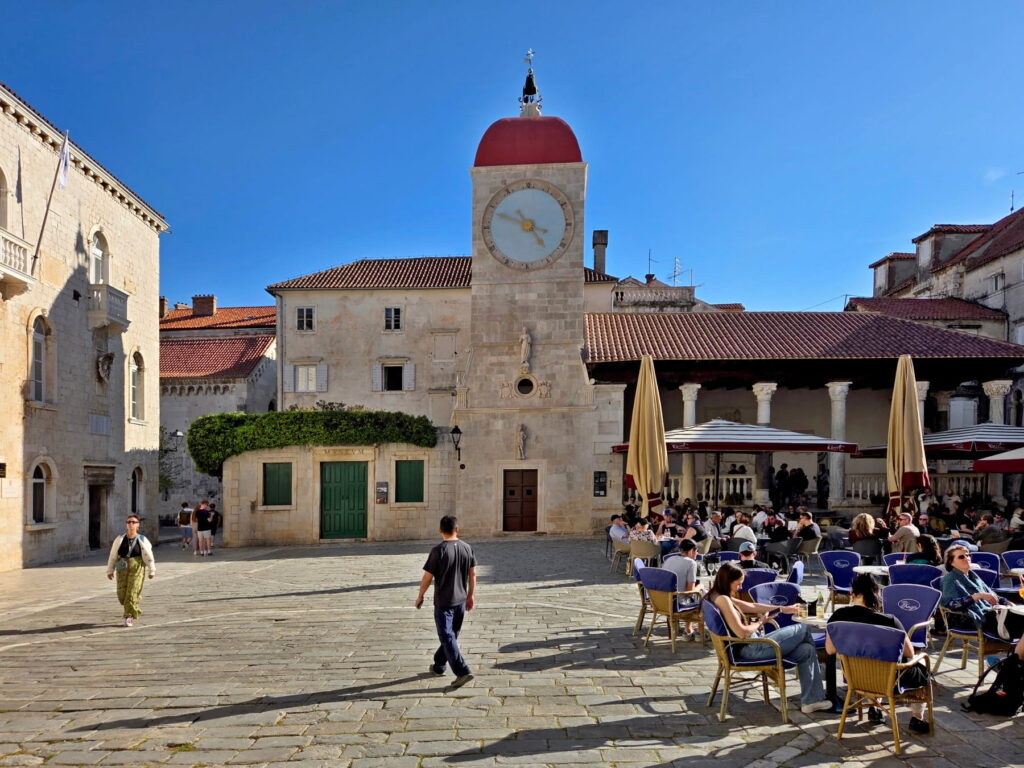
Climb Kamerlengo Fortress
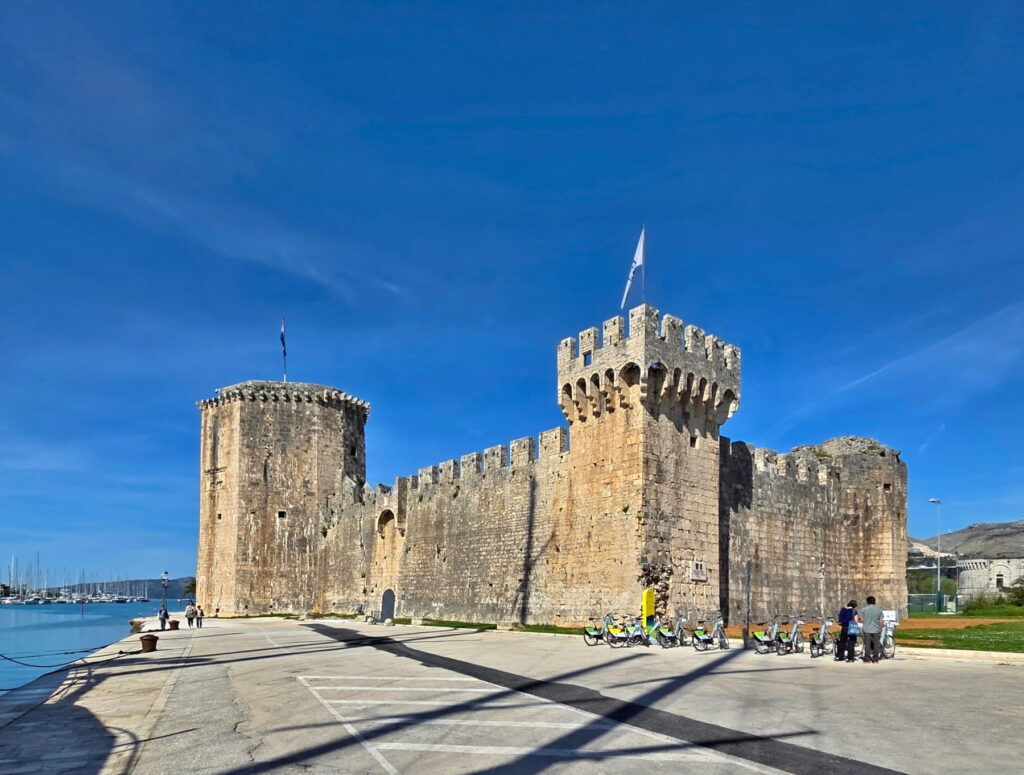
Kamerlengo Fortress stands at the western edge of the old town, close to the waterfront. It is not huge, but its thick walls and open views make it one of the most enjoyable stops in Trogir.
From the top, you get a clear sense of how small the old town really is. The sea, boats, church towers, and red roofs all sit close together, which is part of Trogir’s charm.
Tip: Visit later in the day when the stone is warmer in color and the waterfront starts to feel livelier before dinner.
Walk the Waterfront Promenade
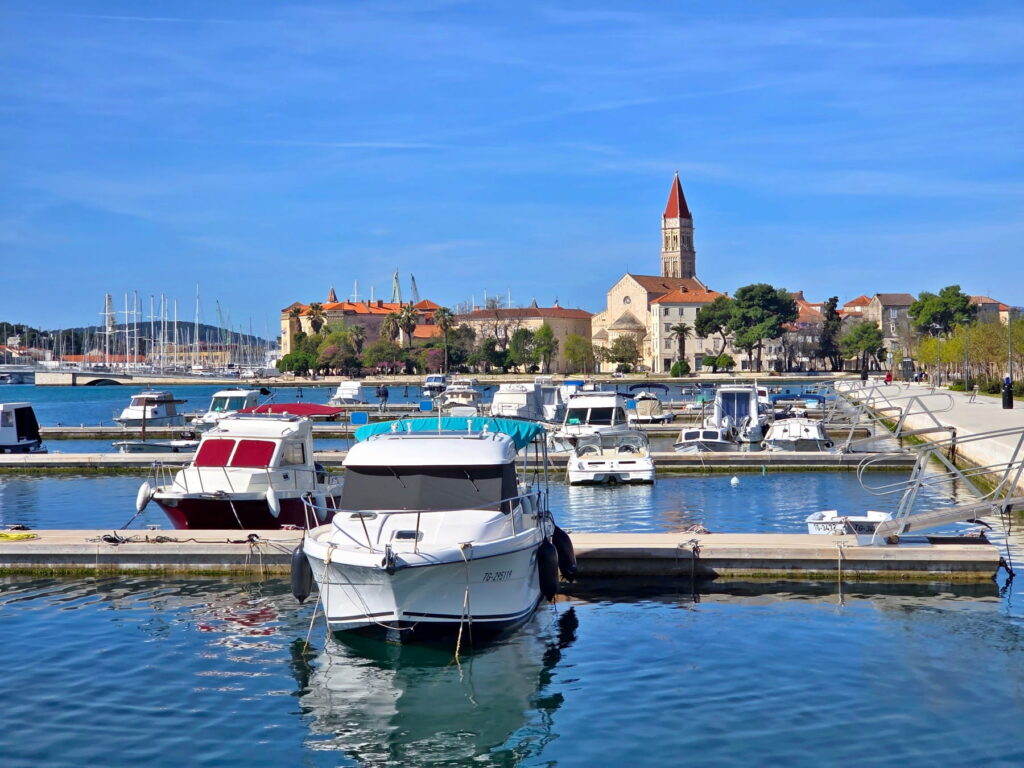
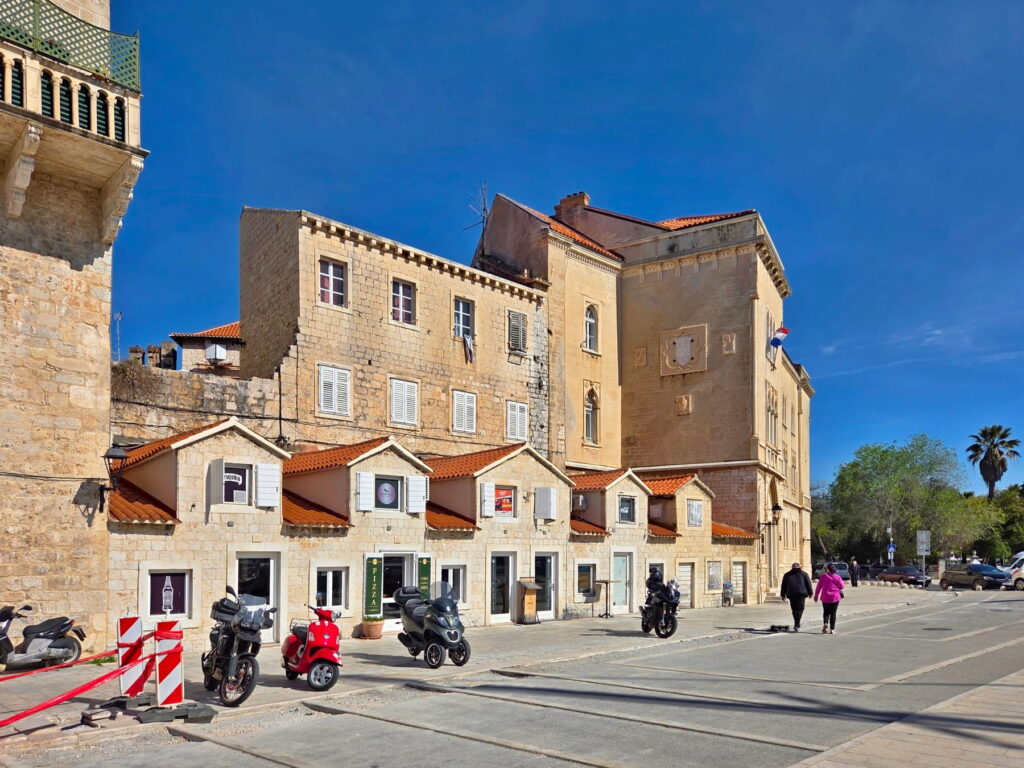
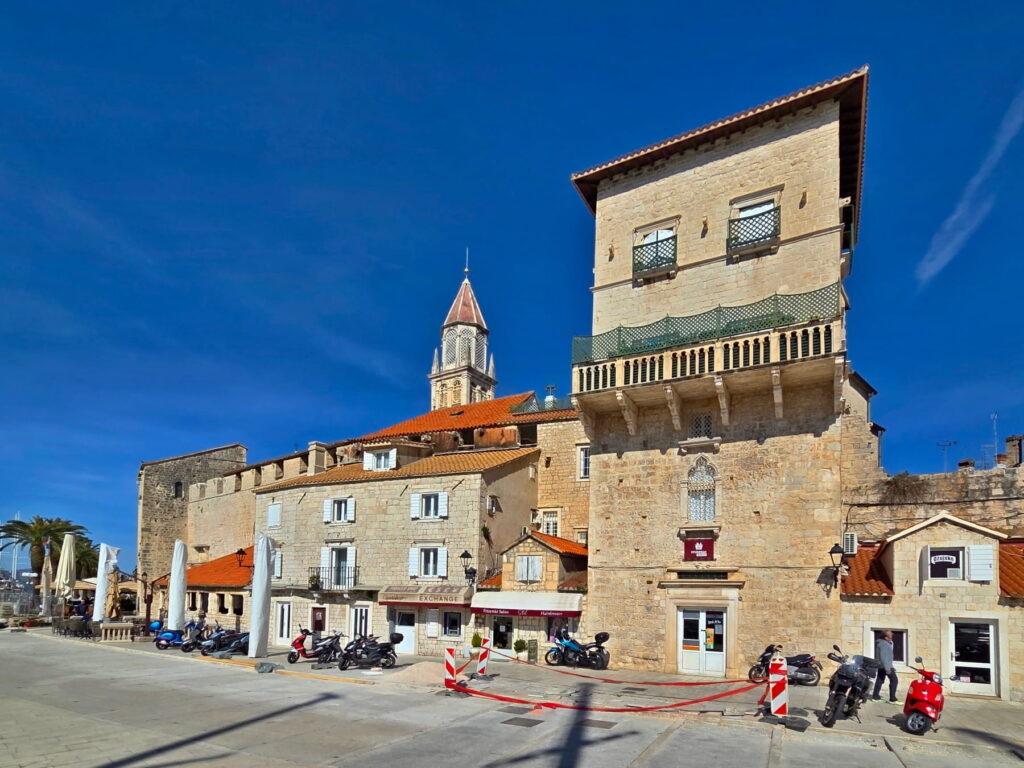
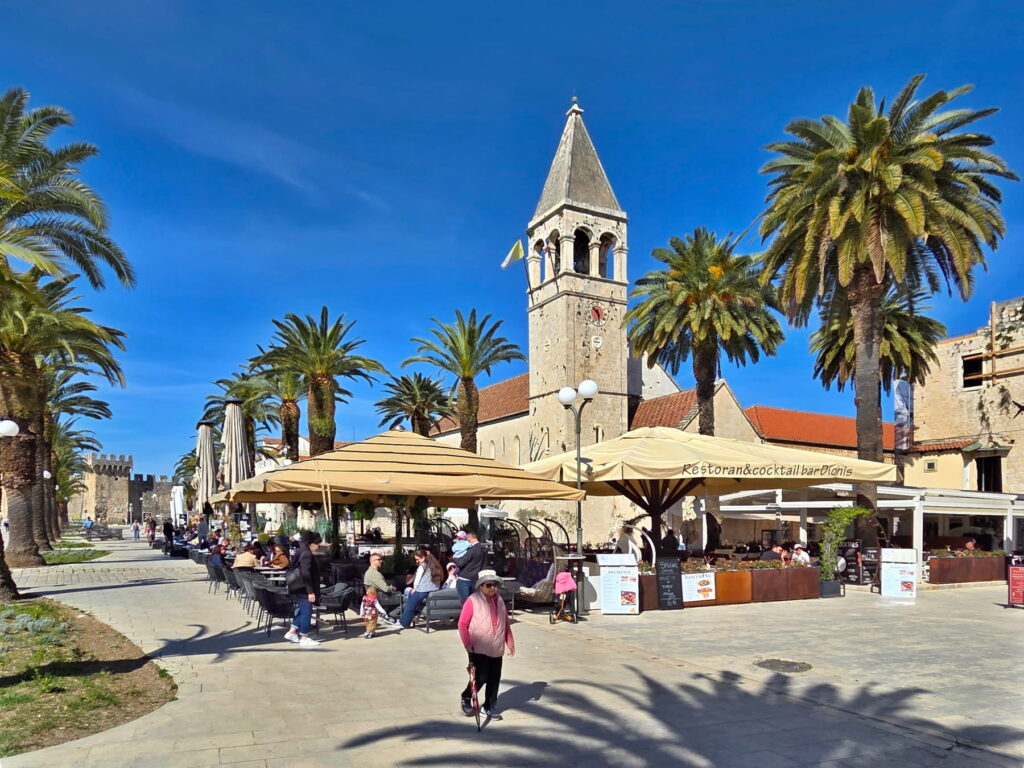
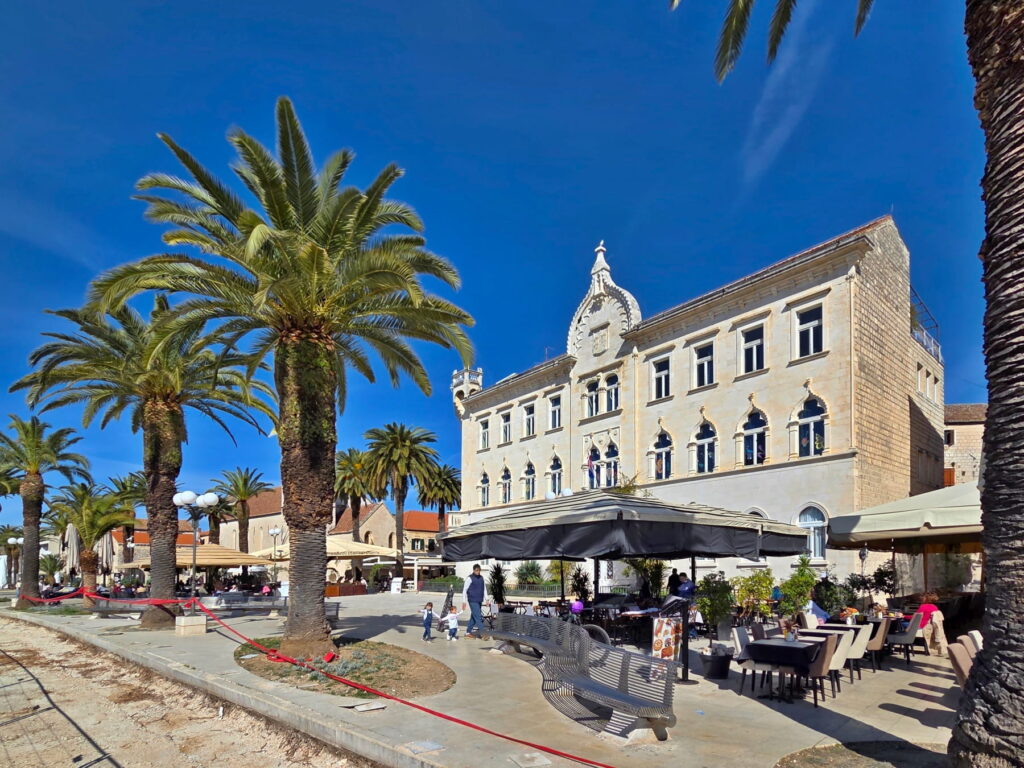
Trogir’s waterfront is where the town opens up after the tight maze of the old center. Palms, boats, restaurant terraces, and views toward Čiovo create a relaxed Adriatic setting, especially in the evening.
It is busier and more polished than the backstreets, but that contrast works well. One moment you are in a shaded medieval lane, the next you are watching yachts move slowly through the channel.
Tip: For a simple evening plan, walk the promenade before sunset, then choose dinner nearby or return into the quieter lanes for a less exposed table.
Try Dalmatian Food and Grilled Fish
Trogir is a good place for a relaxed seafood meal, especially if you enjoy grilled fish, octopus, calamari, and simple Dalmatian cooking. Many restaurants are set in stone courtyards or along narrow lanes, where the evening atmosphere feels more intimate than on the main promenade.
Restaurant Kamerlengo is a well-known option for fish and grilled dishes. It sits inside the old town, so it works well after sightseeing without needing to move the car or leave the center.
Tip: In high season, book dinner ahead. Outside season, check opening times first, as the choice of restaurants can be more limited, even though some services continue around Christmas and New Year.
Hidden Gem in Trogir: Quiet Lanes Behind the Main Square
The most memorable part of Trogir is often not one specific monument, but the small streets just away from the busiest route. A few turns from the cathedral, the crowds thin out and you find quiet corners, old shutters, stone staircases, and cats sleeping in doorways.
This is where the town feels less like a sightseeing stop and more like a lived-in Adriatic place. It also makes Trogir feel different from larger coastal cities such as Split, where the old center is broader and more intense.
Tip: Do one slow walk through the old town without using a map. Trogir is small enough that you will not get seriously lost.
Best Views in Trogir
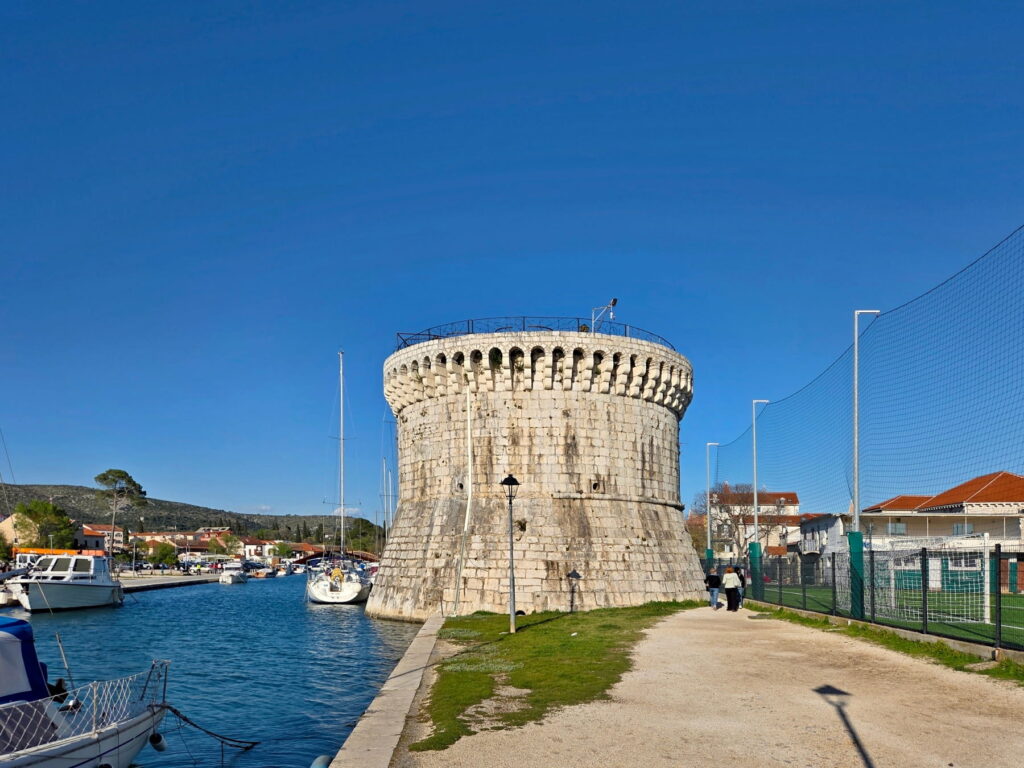
The best views in Trogir come from the Cathedral bell tower, Kamerlengo Fortress, and the waterfront edges around the old town. From above, you see the compact island layout, the bridges, the marina, and the surrounding blue water.
For an easy scenic walk, follow the promenade and continue toward the bridges connecting the mainland and Čiovo. Around sunset, the light softens on the stone façades, and the town feels calmer once day-trippers begin to leave.
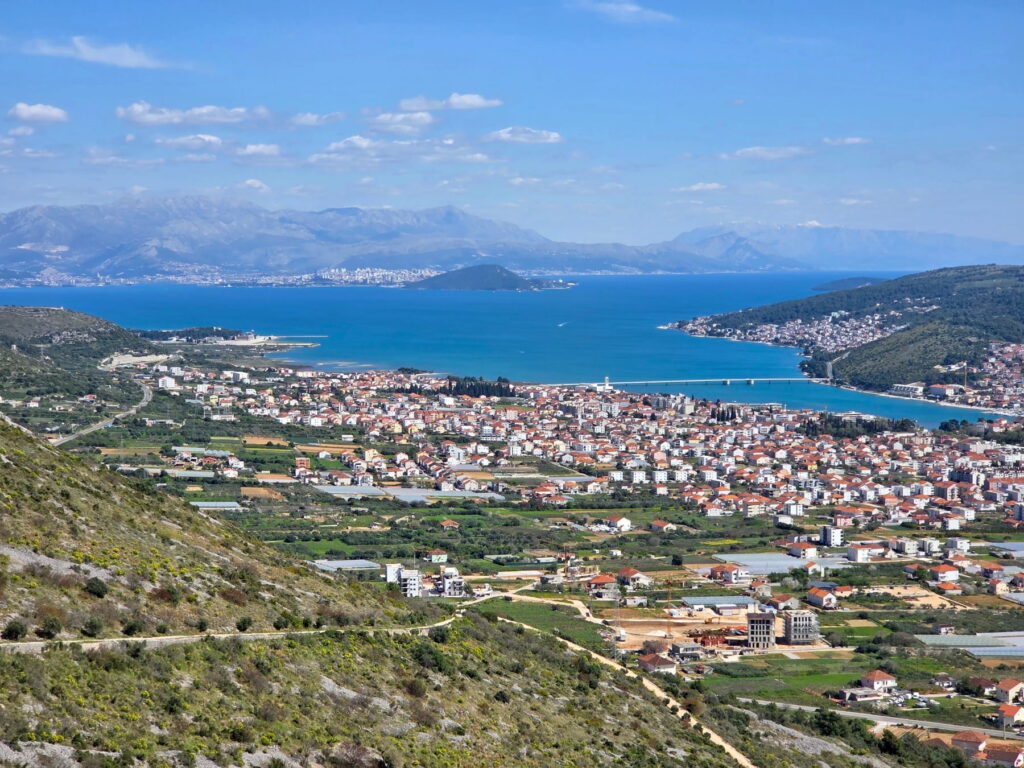
For a wider perspective, cross toward Čiovo and look back at the old town from across the channel. It is a simple view, but it shows why Trogir feels so distinctive: a small historic town surrounded by water, boats, and hills in the distance.
Where to Stay in Trogir
Luxury: Brown Beach House Croatia – stylish seafront hotel outside the old town, better if you want comfort and easier access by car.
Mid-range: Hotel Monika – characterful hotel in the old town, convenient for sightseeing and evening walks.
Budget: Hostel Marina Trogir – simple budget option near the marina, useful for short stays and travelers prioritizing location.
Practical Tips for Visiting Trogir
The best time to visit Trogir is spring, early summer, September, or even the quieter winter holiday period if you do not need a full restaurant scene. Summer has the warmest sea and liveliest atmosphere, but also the heaviest crowds.
Split Airport is very close to Trogir, which makes the town one of the easiest coastal stops to reach in Croatia. It is also a practical base if you plan to visit Split, Šibenik, Zadar, Krka National Park, or the small island monastery of Visovac.
Parking inside the old town is extremely limited, so it is better to choose accommodation with parking outside the historic center if you arrive by car. Large paid parking areas near the center allow you to walk into the old town in about 10 minutes.
Tip: If you are driving, park before entering the tight central area. Trogir is best explored on foot, and the old town streets are not designed for regular car access.
More Places to Visit Near Trogir
- Split – A lively coastal city with Diocletian’s Palace, beaches, restaurants, and ferry connections.
- Šibenik – A beautiful stone city with a cathedral, fortresses, and a more local Dalmatian feel.
- Krka National Park – Famous for waterfalls, wooden paths, river views, and easy day trips from Trogir.
- Visovac Monastery – A peaceful island monastery surrounded by the waters of Krka National Park.
- Kaštel Gomilica – A small coastal settlement known for its old fortified seaside atmosphere.
- Kaštel Lukšić – Relaxed coastal town with a small marina, beaches, and a calmer atmosphere near Split.
- Zadar – Historic Adriatic city famous for the Sea Organ, Roman ruins, and lively sunset waterfront.