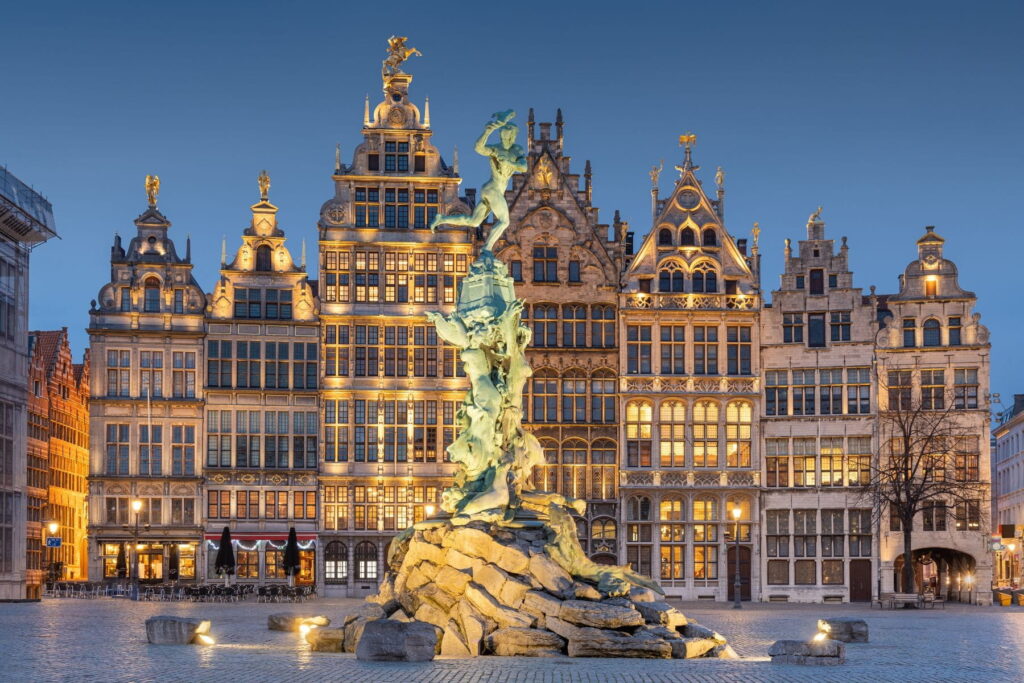
Belgium is one of those European countries that quietly surprises you. It does not try to compete with the scale of France or the intensity of Germany, yet its historic cities, elegant squares, canals, cafés and food culture often leave a deeper impression than travelers expect. This is a country made for slow city walks, golden evening light on medieval façades, long lunches, excellent beer and short train rides between beautiful places.
For many visitors, Belgium is the perfect compact Europe trip: Brussels for museums and grand architecture, Bruges for canals and romance, Ghent for atmosphere, Antwerp for design and style, and the Ardennes for forests, castles and road trips. Distances are short, but the variety is real.
Why Visit Belgium
- Travel style: Historic cities, food, culture, architecture, weekend breaks, photography and easy rail trips.
- Best experiences: Medieval squares, canals, Belgian chocolate, waffles, beer cafés, museums, Christmas markets and relaxed city evenings.
- Atmosphere: Elegant and historic, but less overwhelming than Paris or Amsterdam.
- Best for: Couples, photographers, food lovers, history fans, architecture enthusiasts and travelers who like compact itineraries.
- Best season: April to October for city trips and outdoor travel, with December ideal for Christmas markets.
Best Places to Visit in Belgium
Ghent feels like Belgium’s most rewarding city for travelers who want beauty without too much polish. Its canals, guild houses and towers create a dramatic historic skyline, but the city also feels young, lived-in and creative thanks to its university energy.
Visit for evening photography along Graslei and Korenlei, relaxed cafés, medieval architecture and a less crowded alternative to Bruges. Ghent is a natural future link for guides about canal walks, weekend breaks and Belgium’s best historic cities.
Bruges
Bruges is the postcard image of Belgium: cobbled lanes, quiet canals, stepped-gable houses and the sound of church bells drifting over the rooftops. It can be busy during the day, but early mornings and evenings reveal a softer, more atmospheric side.
Visit for romantic walks, canal views, chocolate shops, Christmas markets and one of Europe’s most beautifully preserved medieval centers. Bruges works especially well for couples, photographers and first-time visitors.
Brussels
Brussels is grander and more layered than many travelers expect. The Grand Place is one of Europe’s most impressive squares, but the city also has Art Nouveau architecture, museums, comic-book culture, international neighborhoods and excellent food.
It is not as instantly romantic as Bruges or Ghent, but it rewards curiosity. Visit for architecture, galleries, beer bars, chocolate, politics, and easy train connections across Belgium and beyond to Paris, Amsterdam and Cologne.
Antwerp
Antwerp has a sharper, more urban feel than Belgium’s medieval canal cities. It is known for fashion, diamonds, design, art and one of Europe’s most beautiful railway stations.
Visit for the cathedral, Rubens heritage, riverside walks, independent boutiques and a stylish café scene. Antwerp is ideal for travelers who like culture with a more contemporary edge.
Spa
Spa sits in the green hills of Wallonia and gave its name to spa culture itself. The mood here is calmer and more rural, with thermal traditions, forested surroundings and access to the Ardennes.
Visit Spa for wellness, nature, scenic drives and a slower break after several city days. It makes a useful internal link opportunity for Ardennes road trips and relaxing escapes in Belgium.
Dinant
Dinant is one of Belgium’s most dramatic small towns, squeezed between the Meuse River and steep limestone cliffs. Its riverside setting, citadel and distinctive church tower make it instantly memorable.
Visit for photography, river views, kayaking, short hikes and a taste of Wallonia’s quieter charm. Dinant feels very different from Flanders and adds variety to a Belgium itinerary.
Leuven
Leuven is a lively university city with one of Belgium’s most striking town halls. It has historic architecture, student energy, beer culture and a relaxed rhythm that makes it easy to enjoy without rushing.
Visit for terraces, breweries, libraries, architecture and a youthful atmosphere close to Brussels. It is a smart choice for travelers who want a smaller city with real local life.
Mechelen
Mechelen is often overlooked, which is exactly why it can feel so pleasant. Between Brussels and Antwerp, it offers canals, churches, squares and family-friendly museums without the crowds of better-known cities.
Visit for a quieter Flemish city break, easy walking, photography and a more local Belgian atmosphere. It is a good alternative for travelers who have already seen Bruges and Ghent.
Namur
Namur, the capital of Wallonia, sits where the Meuse and Sambre rivers meet. Its citadel, old streets and riverside setting give it a relaxed, understated appeal.
Visit for views, slow walks, cafés and access to southern Belgium. Namur is especially useful as a gateway to the Ardennes and the scenic towns of Wallonia.
Hoge Kempen National Park
Hoge Kempen National Park shows a different side of Belgium: pine forests, heathland, lakes and cycling trails instead of medieval squares. It is one of the best places in the country for travelers who want nature without going far off route.
Visit for hiking, cycling, fresh air and a break between city stops. It pairs well with Limburg, Maastricht in the Netherlands and longer Benelux itineraries.
Best Regions in Belgium
Flanders is the classic Belgium of medieval cities, canals, art, beer cafés and cycling routes. It is best for first-time visitors, photographers, architecture lovers and travelers planning city-to-city train trips.
Wallonia feels greener, hillier and more relaxed. It is known for river valleys, castles, citadels, caves and small towns such as Dinant and Namur, making it ideal for road trips and slower travel.
Brussels Region is compact but culturally dense. It suits travelers who want museums, architecture, food, nightlife and international connections in one place.
The Ardennes bring forests, valleys, viewpoints and outdoor activities. This region is best for hikers, families, drivers and anyone wanting a nature-focused contrast to Belgium’s cities.
The Belgian Coast offers wide beaches, seaside promenades and tram-linked resort towns. It is not Mediterranean, but it has a nostalgic North Sea charm, especially in summer.
Food and Local Experiences in Belgium
Food is one of the main reasons Belgium stays with travelers. This is a country where small pleasures matter: a paper cone of crisp fries, a warm waffle eaten in the street, pralines chosen carefully from a chocolate shop, or mussels with fries in a busy brasserie.
Belgian beer culture is remarkably varied, from Trappist ales and lambics to strong blond beers and local city brews. The best beer cafés often feel cozy rather than flashy, with wooden interiors, old mirrors and menus that take time to understand.
Markets and cafés are part of everyday travel here. In Brussels, Antwerp, Ghent or Leuven, you notice how easily locals move between work, terraces, bakeries and evening drinks. Belgium’s food culture feels generous, but not showy.
Try Flemish stew, seafood on the coast, local cheeses, chocolate, waffles, fries and seasonal dishes. The pleasure is not only in famous specialties, but in how naturally food fits into the rhythm of the trip.
Best Experiences in Belgium
Walk through Ghent or Bruges after sunset, when day-trippers have left and the historic buildings glow above the canals. This is when Belgium becomes most atmospheric.
Take the train between Brussels, Ghent, Bruges, Antwerp, Leuven and Mechelen, building a compact itinerary without long travel days. Few countries in Europe make it so easy to combine several beautiful cities in one short trip.
Drive through the Ardennes for forest roads, river valleys, castles and viewpoints. Stop in Dinant or Namur, then continue into smaller villages where Belgium feels quieter and more rural.
Visit Christmas markets in December, especially in Brussels, Bruges, Ghent or Antwerp. The combination of medieval squares, lights, waffles, beer and winter air gives Belgian cities a particularly warm seasonal atmosphere.
Explore museums and architecture in Brussels and Antwerp, from Art Nouveau details to grand railway halls and cathedral interiors. Belgium rewards travelers who look closely.
Spend time in cafés rather than rushing between sights. A good Belgium trip often depends less on checking off landmarks and more on enjoying the pauses between them.
Practical Tips for Visiting Belgium
The best time to visit Belgium is from April to October, when city walks, terraces and day trips are at their easiest. Spring and early autumn are especially pleasant, with milder weather and fewer crowds than peak summer. December is excellent for Christmas markets and atmospheric winter city breaks.
Trains are usually the easiest way to travel between major Belgian cities. Brussels, Ghent, Bruges, Antwerp, Leuven and Mechelen connect well, making Belgium ideal for rail-based itineraries.
A rental car is useful mainly for the Ardennes, Wallonia’s smaller towns, countryside stays and national parks. For a city-focused trip, a car can be more trouble than help because parking is limited or expensive in historic centers.
Belgium is not the cheapest country in Europe, but it can feel better value than Paris, Amsterdam or parts of Switzerland. Budget more for restaurants, beer cafés, chocolate and central hotels, especially on weekends and during Christmas market season.
Public transport works well in cities, but many historic centers are best explored on foot. Pack comfortable shoes because cobblestones, station walks and old-town lanes are part of the experience.
For crowds, Bruges is the main place to plan carefully. Stay overnight or visit early and late in the day. Ghent, Mechelen, Leuven and Namur often feel more relaxed, especially outside weekends.
Who Should Visit Belgium
Belgium is excellent for couples because its cities are walkable, atmospheric and full of intimate restaurants, canals and evening views. Bruges and Ghent are especially strong choices for romantic trips.
Families will appreciate the short distances, reliable trains, chocolate shops, museums, castles and easy city centers. Mechelen, Brussels and the Ardennes work particularly well with children.
Photographers will find endless material in medieval squares, canal reflections, Art Nouveau details, railway stations, church towers and Christmas lights. Belgium is especially photogenic in the early morning and blue hour.
Food lovers should come for beer, fries, waffles, chocolate, mussels, Flemish stew and the café culture that ties everything together. The food experience feels accessible rather than intimidating.
Beach travelers can enjoy the Belgian Coast in summer, especially if they like wide North Sea beaches and promenade towns. Road trip travelers should look toward Wallonia, the Ardennes and cross-border routes into Luxembourg, France or Germany.
Slow travelers will enjoy Belgium most of all. The country is compact, but it rewards lingering: one more café, one more square, one more evening walk beside the water.
More Places to Visit Near Belgium
- Netherlands: A natural next stop for canals, cycling culture, Amsterdam, Rotterdam and smaller Dutch towns.
- France: Easy to combine with Paris, Lille, Champagne or northern France.
- Germany: Cologne and Aachen pair well with eastern Belgium and Christmas market trips.
- Luxembourg: A compact and scenic addition to an Ardennes or Wallonia road trip.
- Amsterdam: A strong city-pairing with Brussels, Antwerp or Ghent by train.
- Paris: Perfect for travelers combining Belgium with a classic France itinerary.
- Cologne: Ideal for architecture, museums and winter markets near Belgium’s eastern border.
- Luxembourg City: A dramatic hilltop capital that works well after Namur, Dinant or the Ardennes.